Truck gearboxes and WA heavy vehicle licence restrictions
Automatic, synchromesh and non-synchromesh trucks create very different learning demands. The vehicle used for your Practical Driving Assessment can also determine whether condition A, condition B or no gearbox restriction is recorded on your licence.
See the controls before you choose a course
Ask the provider for the exact make, model and gearbox used for both training and assessment. “Manual” is not specific enough: a synchromesh manual and a non-synchromesh Road Ranger-style gearbox are different learning tasks and can lead to different licence restrictions.
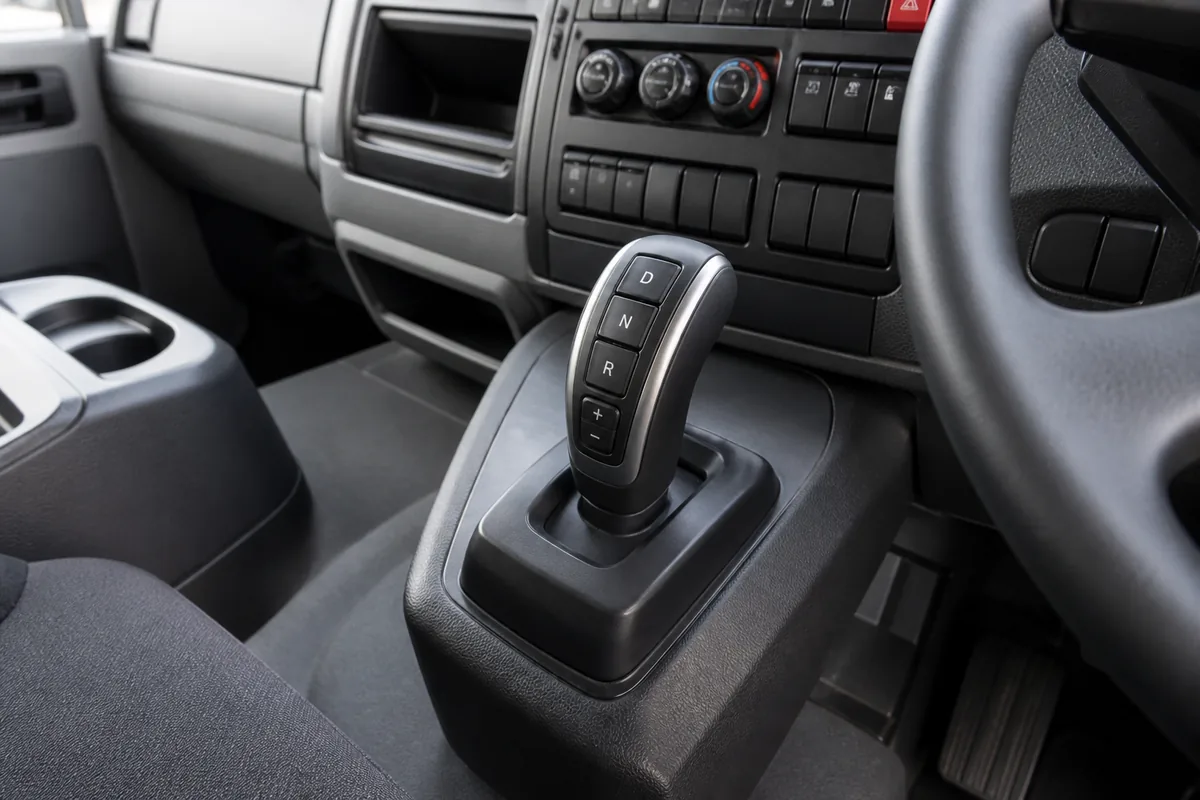
No clutch operation by the driver
An automatic or automated manual transmission selects the driving ratio for you. Some vehicles also provide manual +/-, hold, economy or power modes.
How it is operated: with the vehicle secured and the service brake applied, select the required drive mode and follow the vehicle manufacturer's procedure. The driver remains responsible for safe speed, braking, retarder use, observation and vehicle control.
Likely WA outcome: condition A - automatic transmission only.
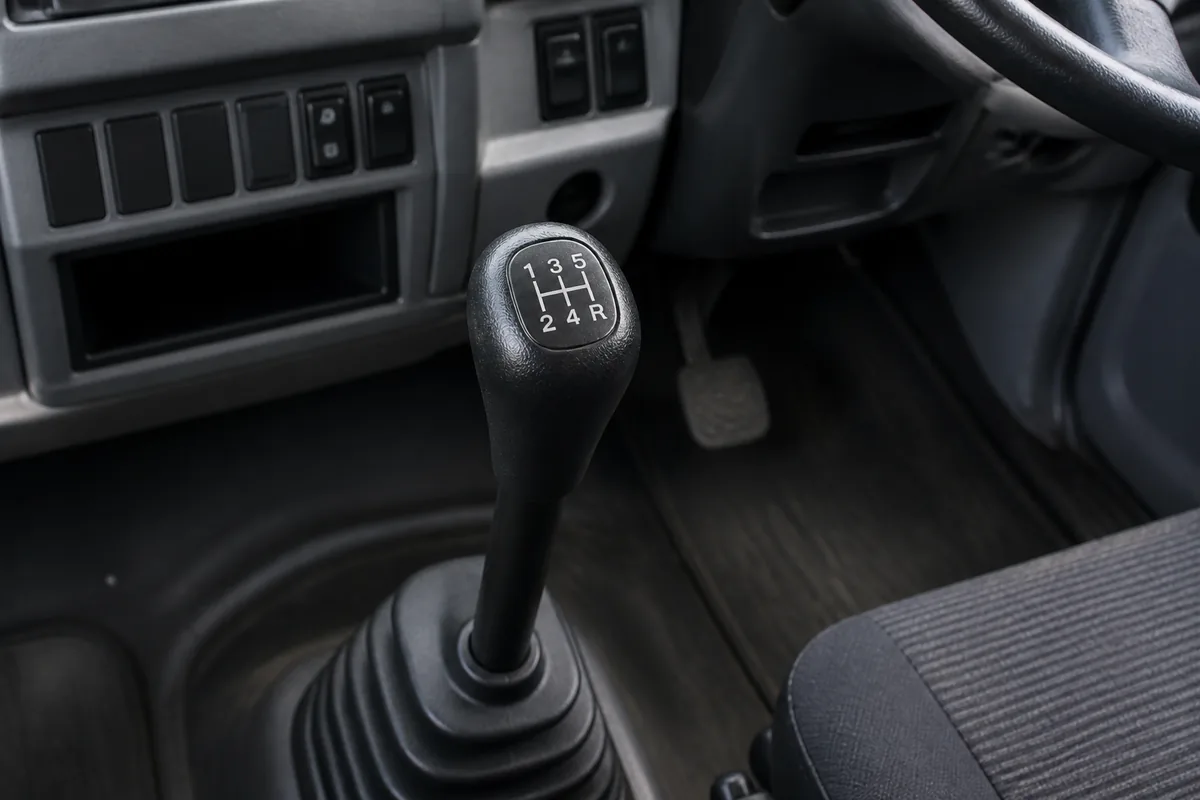
Manual control with synchroniser assistance
Synchroniser collars help match the internal shaft speeds, making gear engagement more forgiving than a non-synchromesh gearbox.
How it is shifted: ease off the accelerator, depress the clutch, select the next suitable gear, release the clutch smoothly and reapply power. Before a downshift, reduce road speed first and select a gear that will not over-rev or labour the engine.
Likely WA outcome: condition B - automatic or synchromesh transmission only.
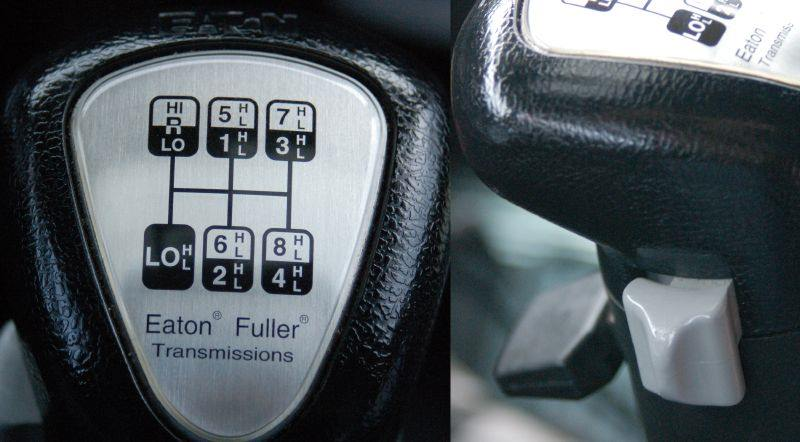
The driver matches engine and gearbox speed
Often called constant-mesh, crash box or Road Ranger-style operation. There are no synchroniser collars to complete the speed matching for the driver.
How it is shifted: for an upshift, double de-clutch through neutral and allow engine speed to fall before selecting the higher gear. For a downshift, double de-clutch through neutral, raise engine speed to match the lower gear, then complete the selection smoothly. Range and splitter controls add another layer of planning.
Likely WA outcome: no A or B gearbox restriction, subject to the assessment result and any other licence conditions.
Automatic is growing, but manual skill still opens doors
The market has moved strongly toward automatic and automated manual transmissions. Many new heavy trucks use AMT systems, and modern city and commuter buses commonly use fully automatic transmissions. Automatic is therefore a practical choice for many metropolitan, passenger-transport and site-bus roles.
That does not make manual skill obsolete. Current WA job advertisements still ask for manual HR licences or Road Ranger experience in parts of road transport, tipper work, rural work, heavy haulage and road-train operations. Mining and FIFO fleets are not all the same: some site buses are automatic, while an employer or labour-hire company may still require a manual HR licence so a driver can move other vehicles.
| Transmission | Where it commonly fits | Main advantage | Important limitation |
|---|---|---|---|
| Automatic / AMT | Newer fleet trucks, distribution, waste and concrete vehicles, metropolitan buses, coaches and many site-bus fleets. | Lower learning load and fatigue; lets a new driver focus more attention on road position, mirrors, braking and hazards. | An automatic-only licence may exclude a job when the fleet or advertisement requires a manual HR, HC or MC licence. |
| Synchromesh | Manual rigid trucks and mixed fleets that do not require a non-synchromesh gearbox. | A useful middle path: manual clutch and gear-control experience with easier engagement than a constant-mesh gearbox. | Condition B does not authorise a non-synchromesh vehicle. |
| Non-synchromesh | A smaller part of newer fleets, but still relevant in older fleets and some road-train, tipper, rural, civil and specialist transport work. | Maximum gearbox flexibility and eligibility for roles that specify unrestricted/open or Road Ranger experience. | Significantly harder for most beginners and usually needs more training time and budget. |
Industry examples: Volvo states that its FH and FM trucks use I-Shift as standard; Scania's current heavy-truck range centres on Opticruise; current Volvo and Scania bus specifications include automatic transmissions. Fleet specifications and job requirements still vary.
Know what condition A and condition B mean
| Assessment transmission | Expected licence result | What it permits | How the restriction is removed |
|---|---|---|---|
| Automatic / AMT | Condition A | Automatic transmission only. | Pass the required assessment in a suitable manual vehicle. |
| Synchromesh manual | Condition B | Automatic or synchromesh transmission. | Pass a Practical Driving Assessment in a suitable non-synchromesh vehicle. |
| Non-synchromesh manual | No A or B gearbox restriction | Automatic, synchromesh and non-synchromesh vehicles within the classes shown on the licence. | No gearbox restriction to remove. |
What the assessor expects from your gear changes
Official WA material does not assess gearbox operation in isolation. You must manage the transmission while maintaining safe observation, road position, steering, speed and vehicle stability.
Smooth and precise
Gear changes must not unsettle the vehicle, occupants or load, cause driveline shock, or leave the engine over-revving or labouring.
Right gear, right time
Adjust speed before selecting a lower gear. Choose the correct gear for the speed, conditions and any severe incline; skip changes may be used when appropriate.
Straight-line changes
Complete gear changes primarily while travelling straight. The DL68 guidance says to change gear when no steering input is required to turn the wheel.
Non-synchro method
For a non-synchromesh assessment, double de-clutching must be used for the majority of the PDA. If a clutch brake is fitted, it should not be fully depressed while the vehicle is moving.
Why non-synchromesh usually costs more to learn
For most beginners, non-synchromesh is the hardest of the three options. You are learning engine-speed matching, double de-clutching, range and splitter planning and missed-gear recovery while also meeting every normal heavy-vehicle driving standard.
Transport WA does not publish a fixed number of lessons or a guaranteed pass rate. A one-day package may suit a driver who already has relevant manual heavy-vehicle experience, but it can be unrealistic for a beginner. Extra lessons and a reassessment can add substantial cost.
- Ask how much non-synchromesh experience the base package assumes.
- Ask for the hourly lesson rate, assessment fee and reassessment fee in writing.
- Confirm whether the same truck is used for training and assessment.
- Book a readiness check before committing to the PDA date.
- Choose unrestricted only when the target job needs it or the extra flexibility is worth the additional training.
The E114 form does not choose your gearbox
For an RTO-delivered HR, HC or MC PDA, the public Heavy Vehicle PDA Customer Eligibility form (E114) covers the licence class requested, identity, eyesight, medical eligibility and camera acknowledgement. It does not let the applicant select automatic, synchromesh or non-synchromesh.
The transmission actually fitted to the assessment vehicle determines the gearbox outcome recorded through the assessment process. Before training starts, ask the provider to confirm in writing:
- The exact assessment vehicle and transmission.
- Whether the expected result is condition A, condition B or no gearbox restriction.
- That the assessment result will record the transmission correctly.
- What documents you must take to a Transport WA service centre after passing.
A simple decision rule
Choose automatic
When your target employer confirms an automatic fleet and you want the quickest, lowest-complexity path into supervised work.
Choose synchromesh
When you want broader manual capability without taking on the full non-synchromesh learning curve.
Choose non-synchro
When the job advertisement or employer requires unrestricted/open or Road Ranger capability, or when maximum future flexibility justifies the extra time and cost.
Check the current WA rules before booking
- Transport WA - licence restrictions and conditions
- Transport WA - Practical Driving Assessment vehicle standard
- Transport WA - DL68 HC and MC assessment information sheet
- Transport WA - Heavy Vehicle Competency Standard
- Transport WA - Heavy Vehicle PDA Customer Eligibility form E114
Information checked 9 August 2026. Licence and assessment rules can change. Confirm the current requirement with Transport WA and the approved assessment provider before paying. The automatic and synchromesh cab images are original illustrative images; the Eaton Fuller photograph was supplied for this page. Controls vary by vehicle.