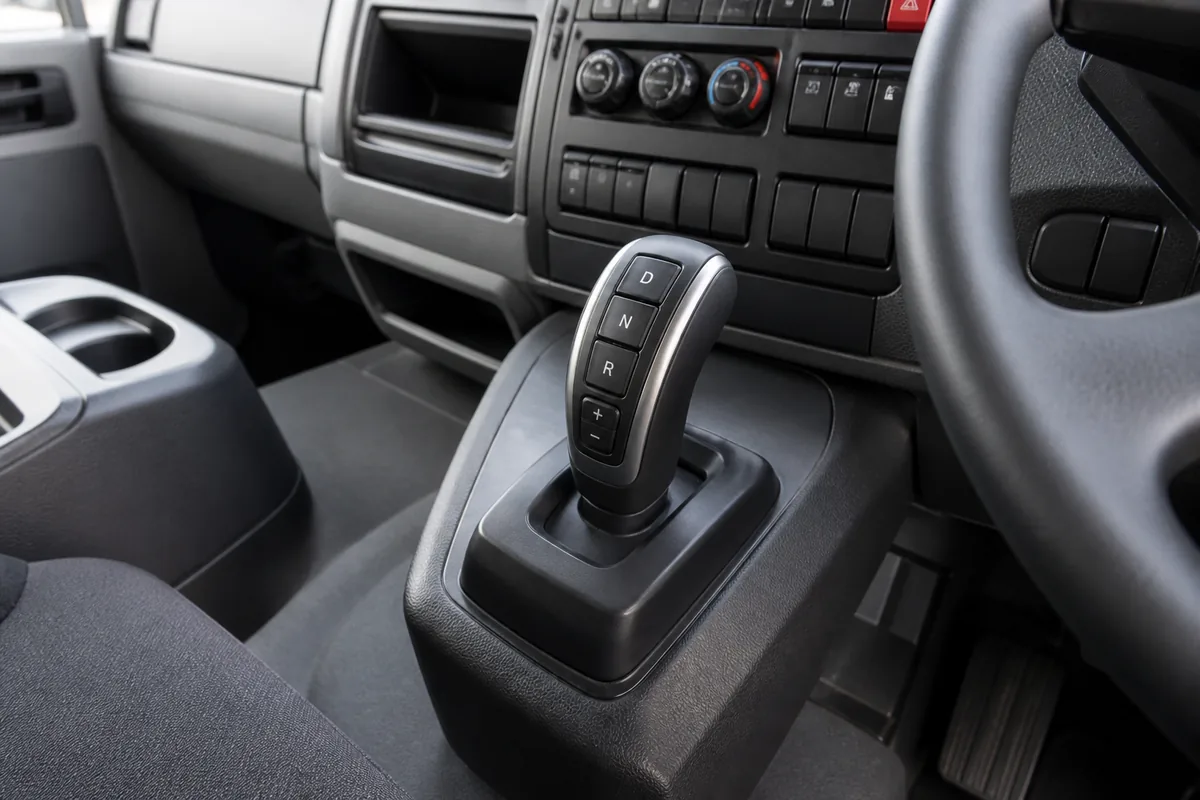
The cabin drill shows that you can prepare yourself and the truck before driving. Use a fixed order so that important controls and safety checks are not missed when you feel nervous.
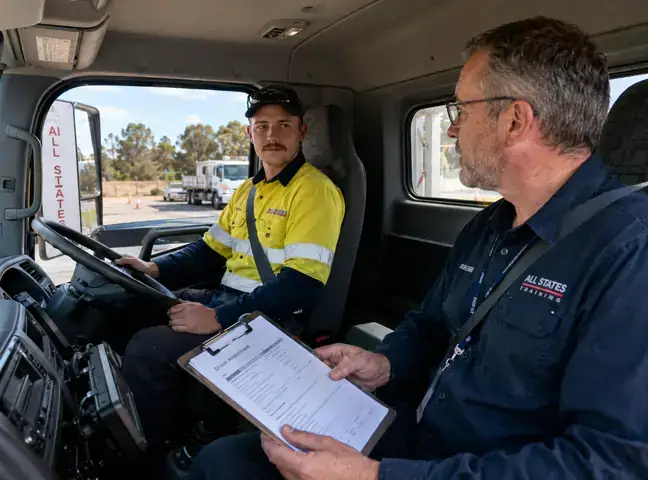
Step 1: Enter with three points of contact
Face the cab and use the steps and grab handles. Do not pull yourself up using the steering wheel. Once seated, close and secure the door.
Step 2: Secure loose articles
Check the floor, dashboard, seat and storage areas. Secure anything that may roll under a pedal, obstruct a control or become a projectile.
Step 3: Confirm the vehicle is secured
Check that the parking brake is applied. Confirm neutral in a manual gearbox or park in an automatic. Keep your foot on the brake where required by the starting procedure.
Step 4: Adjust the seat
Set the distance so all pedals can be fully operated without locking the knees. Adjust the seat height and backrest so you can see clearly and steer without stretching.
Step 5: Adjust the steering and mirrors
Set the steering position where available. Adjust the main, convex and kerb mirrors after the seat has been finalised. The view should help you monitor the side of the truck, rear traffic and blind areas.
Step 6: Check the windscreen and visibility
Confirm that the windscreen and side windows are clear. Set ventilation, air-conditioning or demisters so the glass will remain clear during the drive.
Step 7: Identify the controls
Locate and briefly explain the main controls requested by the assessor. These may include:
- indicators and hazard lights;
- headlights and high beam;
- washers and wipers;
- horn and demister;
- parking and trailer brake controls;
- exhaust brake or retarder; and
- other switches fitted to the vehicle.
Step 8: Fasten the seat belt
Fit the belt correctly and remove any twists. The belt must be worn whenever the vehicle is driven.
Step 9: Complete the ignition check
Turn the key or ignition to the check position and allow the warning-light sequence required for the truck. Observe the dashboard before starting so you can identify abnormal warnings.
Step 10: Start and read the instruments
Start the engine using the vehicle’s approved procedure. Confirm normal oil pressure, air pressure, coolant temperature, fuel level and electrical indication. Explain any remaining warning light and take the necessary action.
Step 11: Monitor before moving
Allow the air system to build, confirm the low-air warning has cleared and listen for unusual sounds. Complete any authorised stationary checks required for that truck.
Step 12: Final observation and move-off
Check the mirrors and blind areas, select the correct starting gear and signal if required. Release the brakes according to the procedure and move away smoothly.
Common cabin-drill mistakes
- Adjusting mirrors before the seat.
- Starting without confirming neutral or park.
- Not securing loose objects.
- Naming controls without knowing their purpose.
- Ignoring a warning light.
- Forgetting the seat belt or final observation.
The exact order may be adapted to the assessment vehicle, but every important safety item must be covered. Review the HR assessment preparation page for the other scoring areas.
Important: This is an educational guide. Current Transport WA requirements, your approved provider’s procedure and the assessor’s directions take priority.