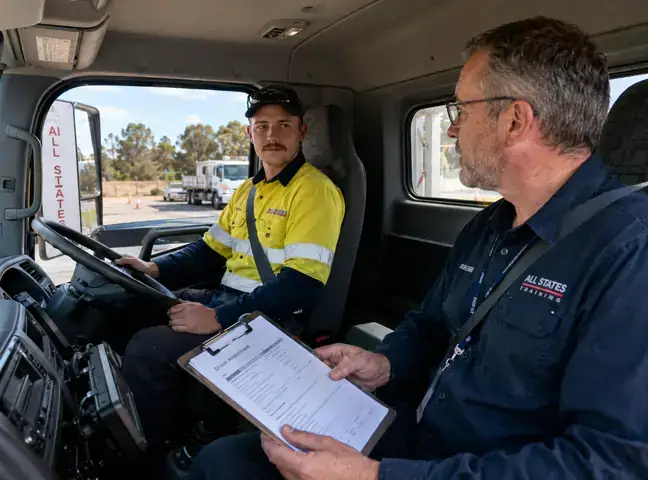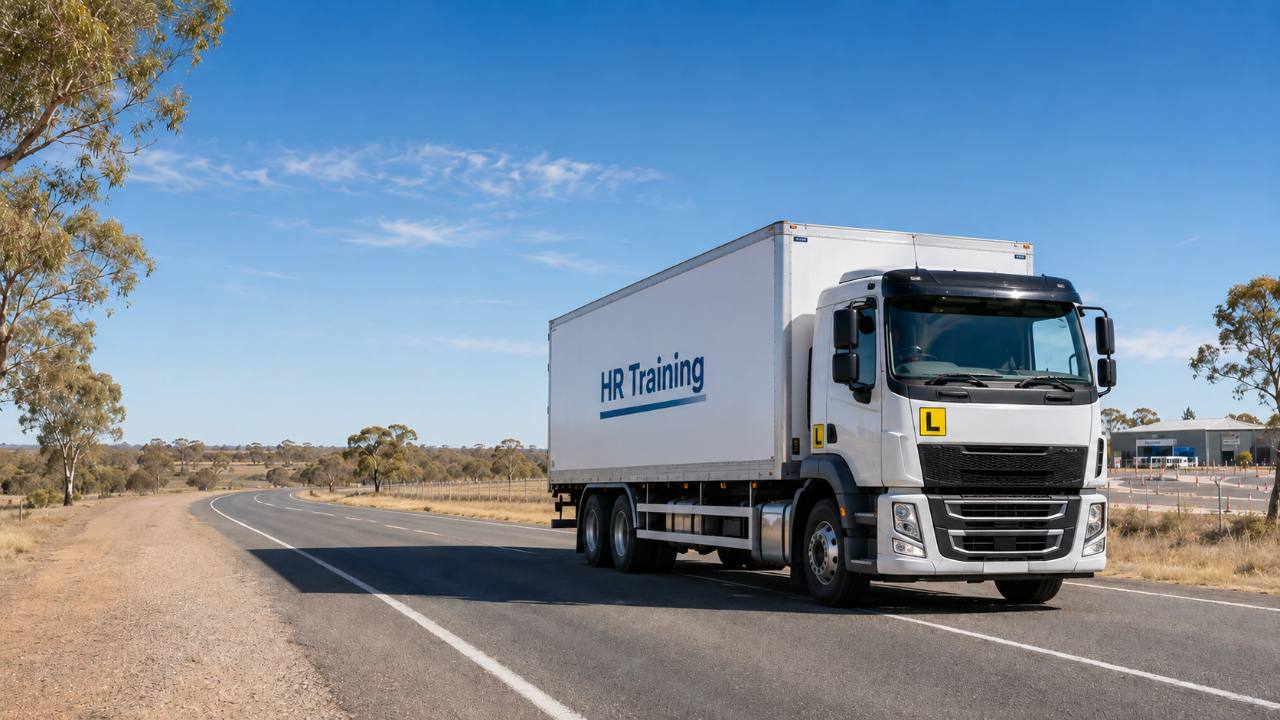
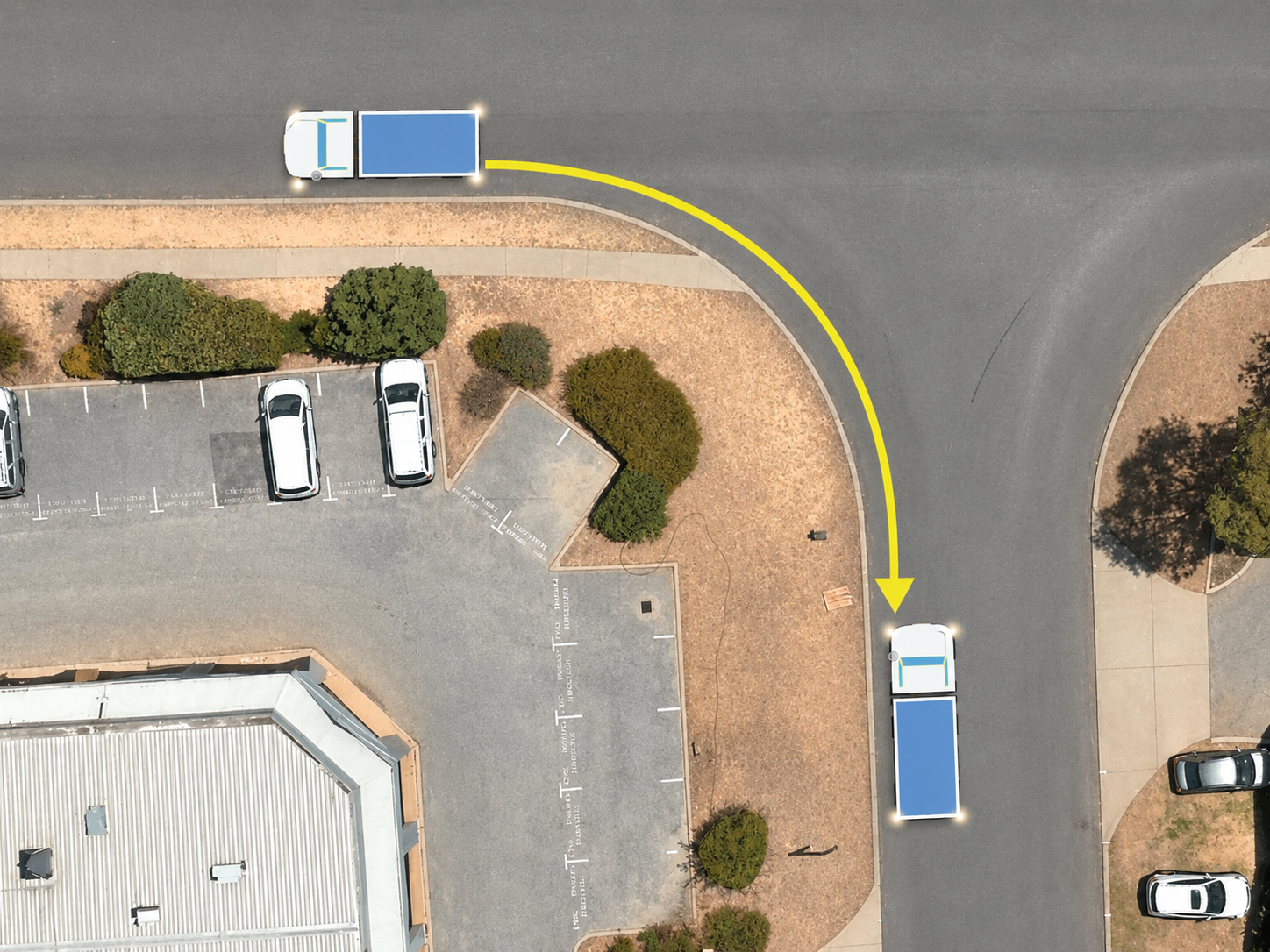
Reversing an HR truck around a corner is mainly an exercise in setup, slow control and observation. A good starting position gives you time to follow the kerb without touching it or moving unnecessarily wide.
Before beginning
Confirm the assessor’s directions, the required finishing position and the area available. Check for traffic, pedestrians, poles, signs, overhanging objects and kerbs. Use warning signals or hazard lights when required by the authorised procedure.
1. Set up parallel to the kerb
Approach the starting area slowly and use the mirrors to establish a controlled distance from the kerb. Stop with enough room for the front of the truck to swing as the rear follows the corner.
2. Select reverse and complete observations
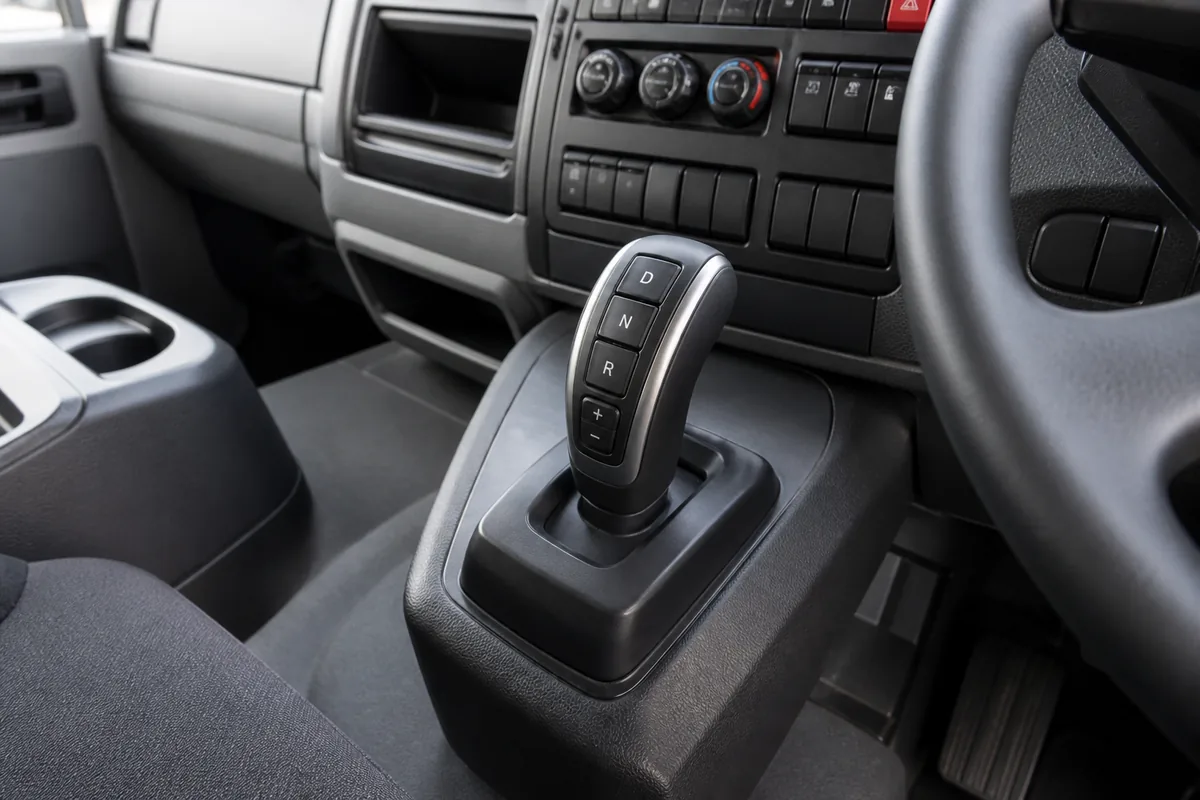
Secure the truck while selecting the gear. Check both mirrors and the surrounding area before releasing the brake. The truck should move only after you know the path is clear.
3. Begin at walking pace
Use the lowest practical speed. Slow movement gives you time to compare both mirrors, recognise off-line movement and make a small correction.
4. Use the rear wheel as a reference
Monitor the rear wheel or another vehicle-specific reference point as it approaches the corner. Begin steering at the reference point taught for that truck. Different wheelbases and rear overhangs require different timing.
5. Alternate between both mirrors
The inside mirror helps you monitor kerb distance. The outside mirror shows the truck’s angle and the area into which the front is swinging. Do not become fixed on only one side.
6. Make small steering corrections
Turn the wheel enough to establish the required angle, then reduce or unwind the steering as the truck follows the new road. Large, late movements can create a second error in the opposite direction.
7. Stop when visibility or clearance is uncertain
Stopping is safer than guessing. Recheck the area, use a permitted shunt or restart if necessary and follow the assessor’s directions. Never continue towards an unseen hazard.
8. Straighten and finish accurately
As the truck enters the new road, progressively straighten the steering. Use both mirrors to finish parallel to the kerb in a safe and legal position without touching it.
Common reversing problems
- Starting too close or too far from the kerb.
- Turning too early and placing the rear too close to the corner.
- Turning too late and travelling wide.
- Watching only the inside mirror.
- Reversing too quickly.
- Forgetting the front swing.
- Continuing after losing a clear view.
Practice method
First practise the setup repeatedly without completing the whole reverse. Next, practise reaching the corner reference point accurately. Finally, complete the full manoeuvre while your trainer records only the number and timing of corrections. The aim is repeatable control, not one lucky attempt.
Read the full HR assessment preparation guide before assessment day.
Important: This is an educational guide. Current Transport WA requirements, your approved provider’s procedure and the assessor’s directions take priority.