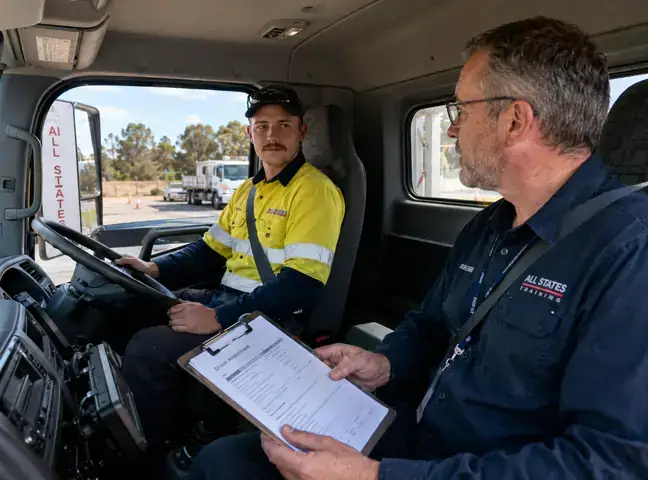
An HR candidate must show that the truck is safe to operate before moving. The exact assessment method can vary, but a systematic pre-drive routine helps prevent missed controls, warning lights and safety items.
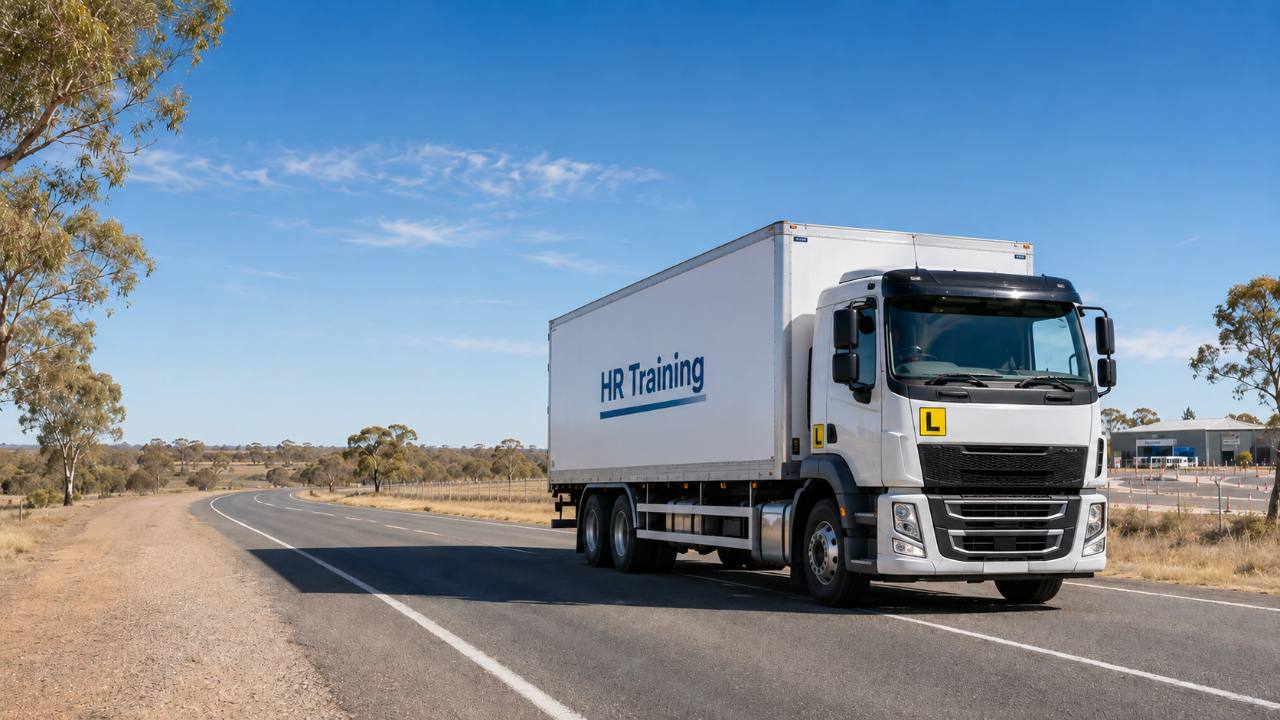
This guide focuses on the rigid-truck preparation used around the HR on-road assessment. For the detailed HC and MC walk-around required under DL68, use the separate HC and MC pre-trip inspection guide.
1. Confirm documents and eligibility
- Carry the required driver licence and identification.
- Confirm the booking, vehicle class and gearbox.
- Wear any glasses or contact lenses required by your licence.
- Confirm that the vehicle is appropriately licensed and suitable.
2. Approach and enter safely
Observe the area around the truck before approaching the door. Check the step and grab-handle area for damage, grease or another hazard. Use three points of contact when entering.
3. Secure loose items
Loose bottles, phones, paperwork or equipment can interfere with pedals and controls. Place them in a safe storage position before starting.
4. Check the driving position
Adjust the seat so you can fully operate the clutch, brake and accelerator while keeping the knees slightly bent. Set the backrest and steering position for effective control. Adjust every required mirror after the seat is set.
5. Locate essential controls
Know the indicators, hazard lights, headlights, high beam, washers, wipers, demister, horn, park brake and door controls. Locate auxiliary controls fitted to the truck, such as an exhaust brake or retarder, without operating them incorrectly.
6. Prepare for engine start
- Fasten and adjust the seat belt.
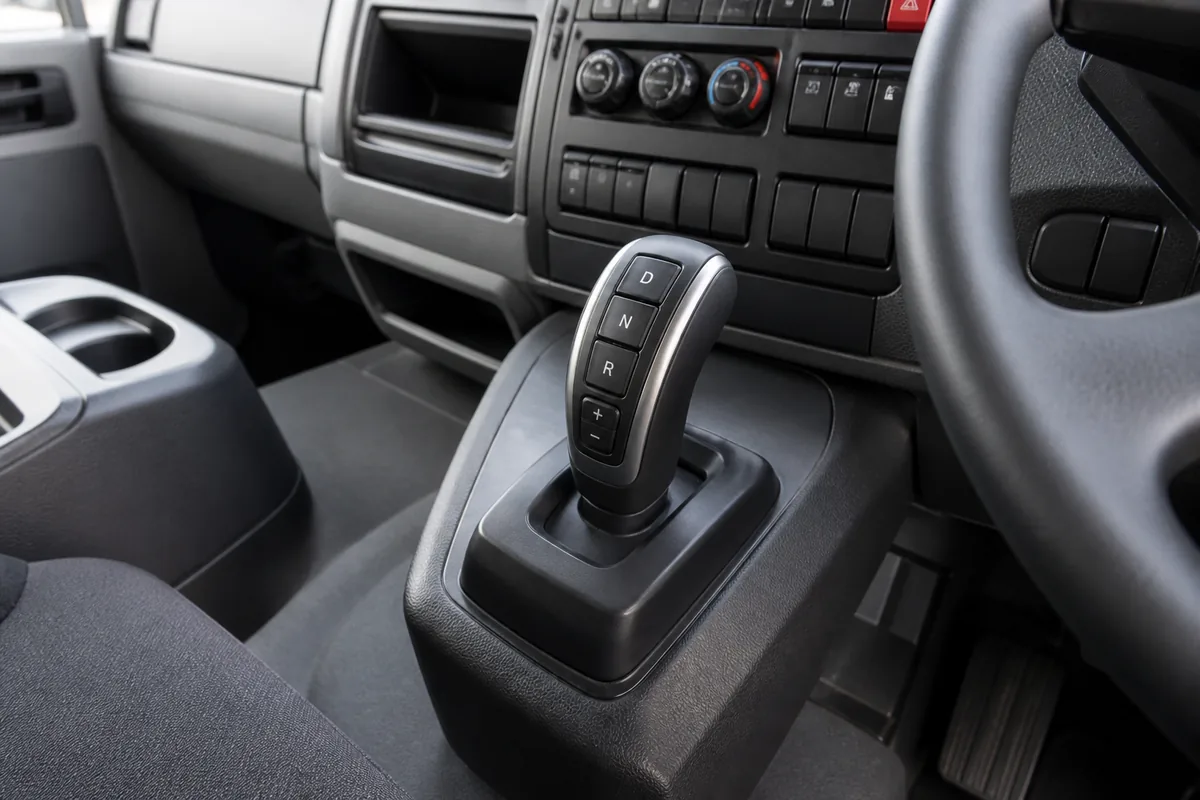
- Confirm neutral in a manual or park in an automatic.
- Apply the parking brake.
- Keep the service brake applied where required.
- Allow the warning-light self-check before cranking if the vehicle procedure requires it.
7. Observe gauges and warning lights
After starting, confirm that the oil pressure, air pressure, coolant temperature, fuel and electrical systems show normal operation for that vehicle. A warning light that remains on must be identified and acted on.
8. Check visibility equipment
Confirm the windscreen is clear and the washers, wipers and demister operate. Check that the mirrors remain correctly positioned. Good visibility is essential before the truck moves.
9. Build and confirm air pressure
Allow an air-brake vehicle to reach the required operating pressure. Follow the manufacturer’s and approved provider’s air-system and brake-test procedure. Do not move with a low-air warning active.
10. Complete the final moving-off check
Check the mirrors, blind areas and the intended path. Select the correct gear and release the brakes according to the vehicle procedure. Move slowly at first and confirm that the steering and brakes respond normally.
If you find a defect
Do not ignore or hide it. Secure the vehicle, report the defect and decide whether the truck is safe and legal to operate. A serious defect can require the assessment to be discontinued.
Next, study the complete HR assessment guide.
Important: This is an educational guide. Current Transport WA requirements, your approved provider’s procedure and the assessor’s directions take priority.