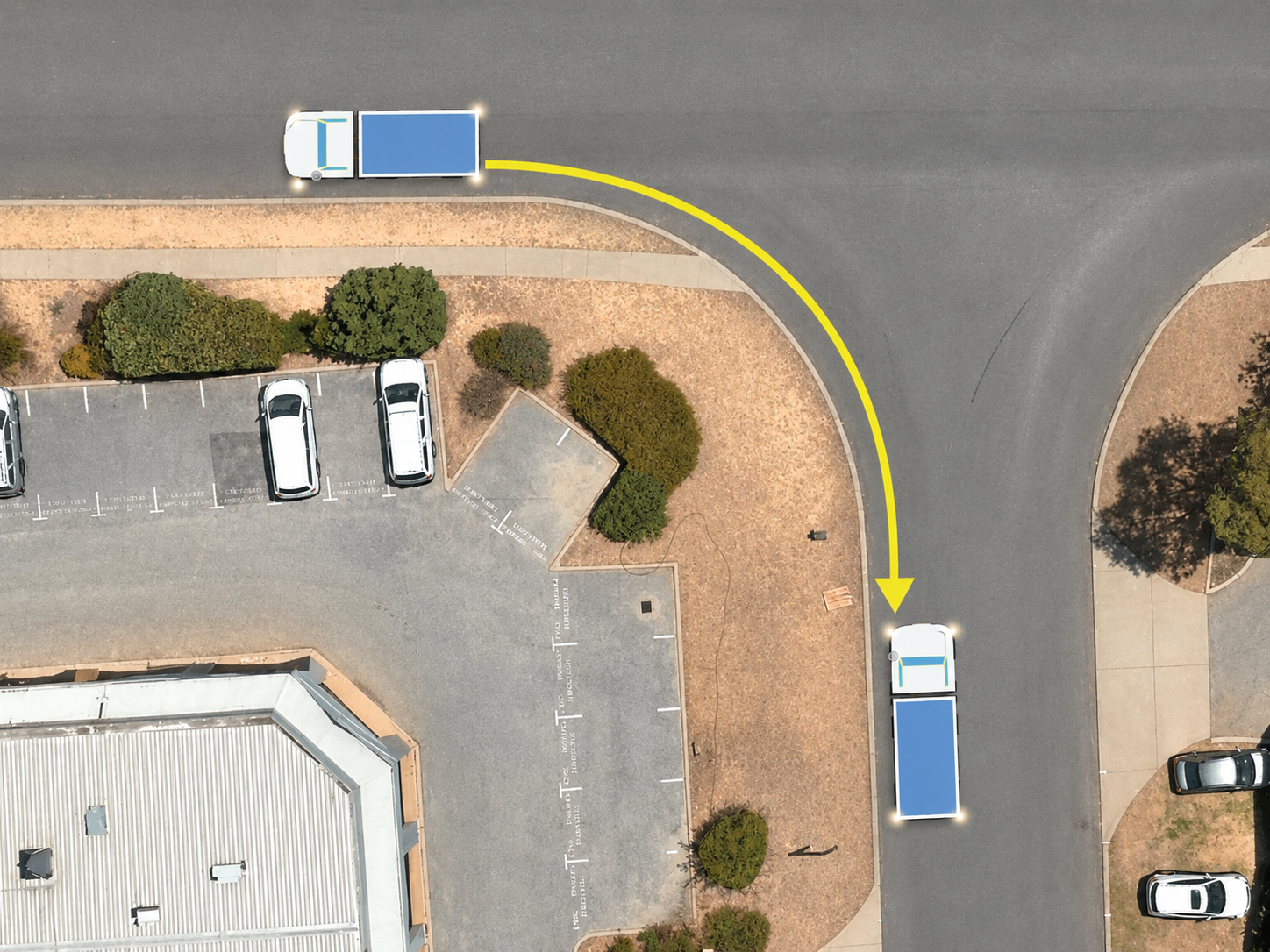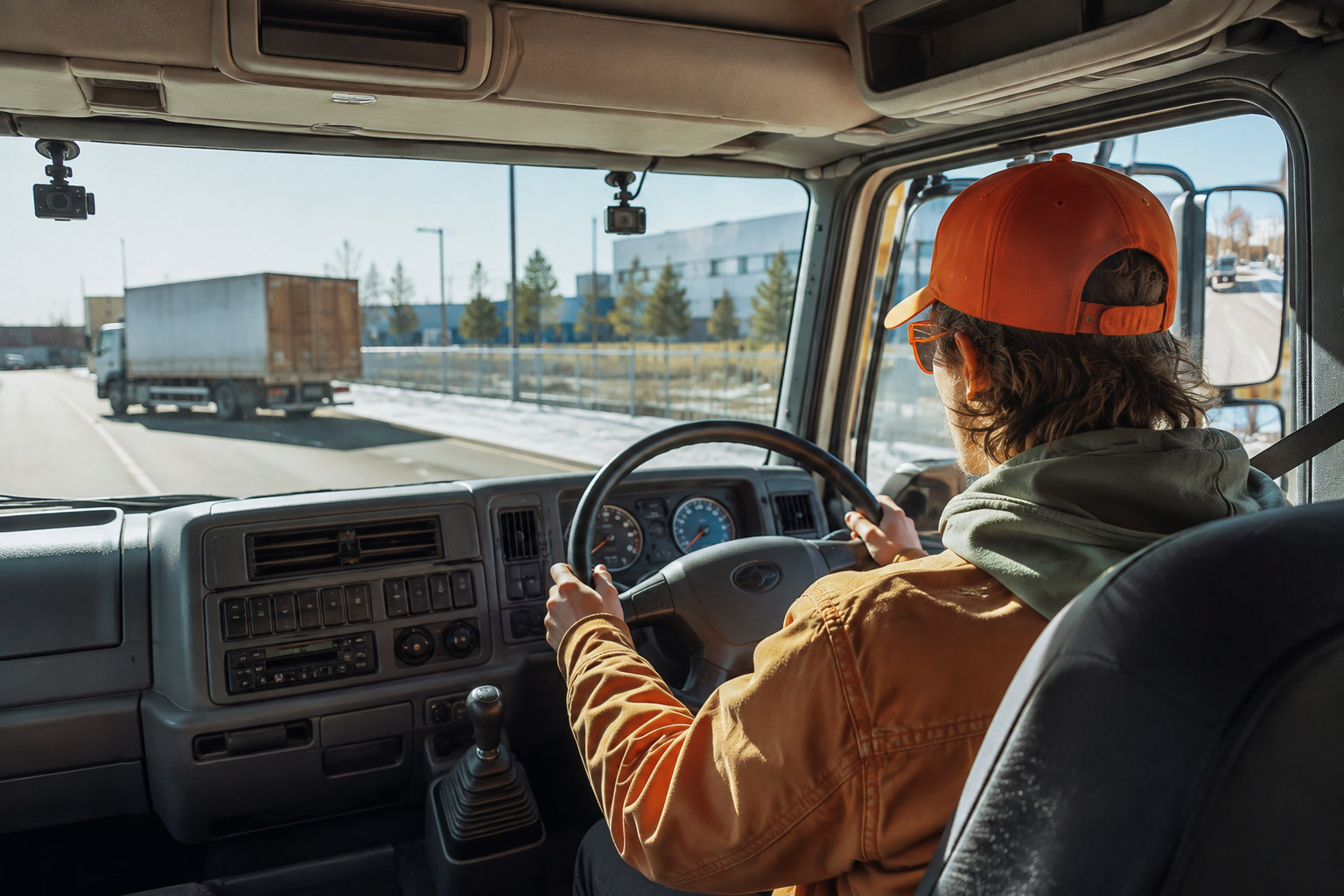
Heavy vehicles need more space to turn because the rear wheels follow a shorter path than the front. The driver must manage speed, mirrors, road position and surrounding traffic without creating unnecessary conflict.
Prepare before the turn
- Identify the street, signs, arrows and available space.
- Check the mirrors before signalling and slowing.
- Signal early enough to warn other road users.
- Brake progressively and select the correct gear.
- Check the relevant mirror and blind area again.
- Begin steering only when the path is safe.
Making a left turn
Position legally and as far left as practicable while leaving enough clearance for the rear wheels. Keep checking the left mirror for cyclists, motorcycles, cars and pedestrians beside the truck.
Move forward far enough before steering so the rear wheels do not climb the kerb. At the same time, monitor the front-right swing and oncoming traffic. Use only the additional road space genuinely required for the vehicle.
Making a right turn
Approach from the correct lane and use the position allowed by signs and road markings. Select a gap large enough for the complete turn. The truck may take longer than a car to clear the intersection.
Do not cut the corner into the path of a vehicle waiting at the side road. Monitor the rear wheels and ensure the trailer or rear overhang clears kerbs, islands and vehicles.
When a long vehicle needs extra space
WA rules provide limited allowances for a vehicle or combination at least 7.5 metres long displaying a compliant “Do Not Overtake Turning Vehicle” sign to use an adjacent lane when a turn cannot otherwise be made safely. This is not permission to ignore safety, signs or traffic. Plan the movement, check mirrors and do not force another road user into danger.
Gear selection and steering
Complete the downshift before significant steering input. Enter in a gear that can carry the vehicle through the turn without labouring, stalling or requiring a gear change halfway around.
Watch the whole vehicle
- Inside mirror: rear-wheel position, kerb clearance and vulnerable road users.
- Outside mirror: front swing, lane line and vehicles beside the truck.
- Forward view: traffic lights, pedestrians and the exit path.
Finish the turn smoothly
Allow the steering to unwind under control and establish the vehicle in the correct lane. Do not accelerate rapidly until the truck is stable, straightening and clear of nearby hazards.
Common turning errors
- Approaching too fast.
- Changing gear during the turn.
- Steering left too early and striking the kerb.
- Cutting a right turn.
- Moving wide when it is not necessary.
- Watching only the front of the truck.
- Failing to protect the side blind area.
- Rapid acceleration before steering is corrected.
For related observation skills, read Correct Mirror Checks During a Heavy Vehicle Assessment.
Official reference: WA Road Traffic Code 2000.
Important: This is an educational guide. Current Transport WA requirements, your approved provider’s procedure and the assessor’s directions take priority.