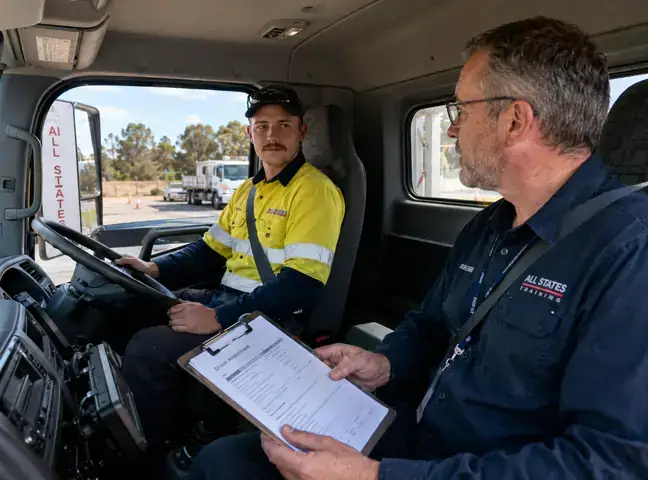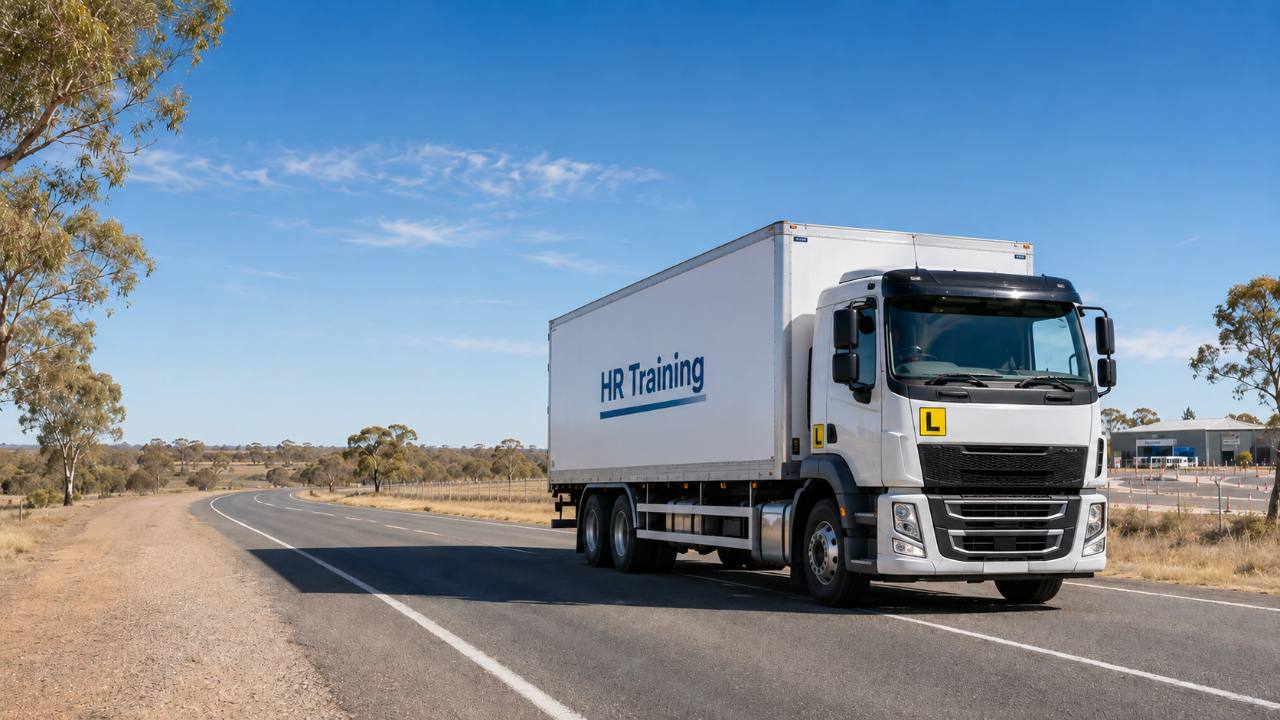
Mirror use is one of the most important habits in a heavy vehicle assessment. The purpose is not to create obvious head movement for the assessor. It is to collect the information needed before you change the truck’s speed, position or direction.
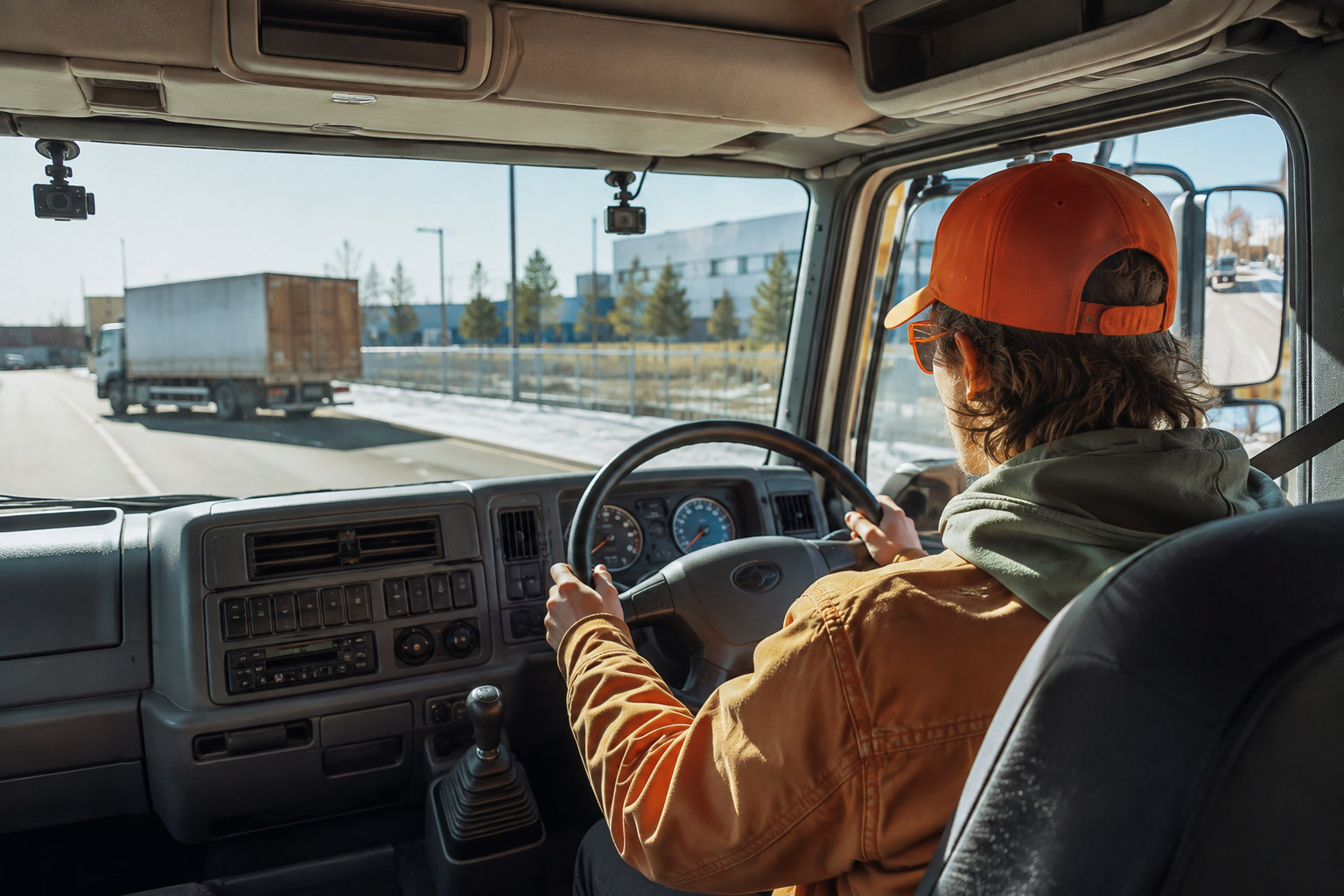
Set the mirrors before moving
Adjust the seat first because a later seat change alters the mirror view. The main side mirrors should show a small reference to the side of the vehicle while providing a useful view of the road behind. Adjust convex and kerb mirrors for the vehicle’s blind areas.
Check before moving off
Check the surrounding area, select the correct gear, release the parking brake as required and complete the final mirror and blind-spot observations before the truck moves.
Check before signalling
A signal tells other road users what you intend to do. Check first so you know whether the intended manoeuvre is safe and whether another vehicle is already beside or approaching the truck.
Check before braking
Before slowing, check behind for following distance, motorcycles and vehicles approaching quickly. This helps you apply the brakes early and smoothly while continuing to monitor the developing situation.
Check before turning
Use mirrors before the signal and speed reduction, then continue checking through the turn. Monitor pedestrians, cyclists, vehicles beside the cab, rear-wheel tracking and rear overhang.
Check before moving laterally
A lane change, merge, obstacle clearance or movement of more than part of the vehicle width requires a deliberate observation sequence:
- Check the relevant mirrors.
- Signal for sufficient warning.
- Check the rear blind area where required.
- Recheck the mirror immediately before moving.
- Move gradually while continuing to monitor clearance.
Check at intersections and roundabouts
Check before slowing and again before committing to the turn. At a roundabout, monitor traffic, lane position and the rear wheels throughout the movement. Before leaving, ensure the side of the combination is clear.
Check during normal driving
Use regular scanning to maintain a picture of traffic behind and beside the vehicle. Do not stare into a mirror for too long. Brief, purposeful checks allow you to return your eyes to the road ahead.
Check continuously while reversing
Alternate between both mirrors instead of watching only the inside corner. Check the intended path, kerb distance, front swing and any traffic entering the area. Stop if the view is unclear.
Common mirror mistakes
- Checking after the brake or signal has already been applied.
- Moving the head without actually reading the mirror.
- Looking only at one mirror during a turn or reverse.
- Forgetting the front swing while watching the rear wheels.
- Changing lanes without a final check.
- Staring into a mirror and losing awareness of the road ahead.
A simple habit
Connect mirrors to every change: before speed changes, before direction changes and before position changes. This is more useful than counting seconds.
See how mirror use fits with all other criteria in the HR assessment preparation guide.
Official reference: WA Heavy Vehicle Competency Standard.
Important: This is an educational guide. Current Transport WA requirements, your approved provider’s procedure and the assessor’s directions take priority.